Category Archives: Spain

Discover the alluring Spanish Islands

How about a Mediterranean vacation that includes fabulous beaches, natural beauty, clubbing opportunities, Gothic cathedrals and historic charm? Well, then, the Balearic Islands will fit that scenario. An independent Spanish province, the island group has a little bit of everything for everyone. The four largest islands in the group are Majorca, Minorca, Ibiza and Formentera. Despite their attraction to tourists, the islands have retained their natural beauty. There’s Gothic cathedrals, Stone Age ruins, quaint fishing villages and spectacular opportunities for hiking.

Interested in attending a rave or finding scenery to rave about? GetAway Travel can help with your island adventure.

Continue reading

Breads around the world

Bread around the world takes many, many forms, but it is universally recognized as a beloved staple of every culture. It is the oldest food form that requires work, and sometimes artistry, to complete. It has an amazing history. We are all about history and tasty vacations at GetAway Travel. We can create a vacation for you, with our without fermentation, that has plenty of history and yummy bread options. Since there is reportedly more than 6,000 types of bread in the world, we can guarantee there will be bread involved in your adventure! Let’s look at some of the bread options from around the world.

Africa and Asia

 The national bread of Ethiopia is Injera. Made with a sourdough starter, it has a unique spongy texture and you can eat it with toppings, or use it as a rolled up vessel for stew and vegetables. There’s also dabo which is generally reserved for special occasions. It is a thicker flatbread made with wheat flour, but it can also contain barley and other flours.

Injera

Enjoy Mielie bread in South Africa. Mielie means maize and the bread is made by steaming cornbread, chock full of while kernels of corn, over a campfire.

Mielie Braai (corn on the grill)

Krachel is a brioche-like roll that you’ll find in Morocco. It is flavored with sesame seeds, anise and orange flower water.

Krachel

Agege is Nigeria’s version of white bread and in South Africa, try roosterkoek which is balls of dough cooked on grates over a grill. Lavish is a soft, thin flatbread baked in a tandoor oven that you can find in Turkey, Iran, Armenia and Azerbaijan. In Turkey you can find simit, a ring-shaped sesame coated flatbread.

Simit, cheese, and turkish tea

Nan-e barbari is Persian flatbread dusted with sesame seeds it has a similar texture to focaccia.

In Turkey you’d eat pide which is a flatbread topped with lots of tasty options. Vacationing in the Arab Emirates? Try Khameer, a soft, pillowy flatbread topped with sesame and black cumin seeds. Made with dates, water, milk and cardamon, it has a sweet, nutty flavor. In Jordan, Lebanon and Syria there is manakeesh. This flatbread is covered with a mix of za’atar (a spice mixture of sumac, herbs and sesame seeds) and olive oil.

Manakeesh

Your meals in India will be accompanied by naan, made by mixing flour with milk or yogurt and baking it in a tandoor.  Or, dosa could be served. Dosa is more labor intensive than naan or chapati. Roti and chapati are more like pancakes and they are baked on a grill. Dosa is made by soaking rice and lentils overnight, grinding the mixture into a paste and then letting it ferment for eight hours. It is grilled.

Masala dosa with chutney and sambar

Paratha is Indian flatbead with layers folded over with ghee in between. It is then pan fried and it heavier than a chapati. It is often served stuffed with vegetables and paneer cheese.

Aloo Paratha with butter and curry

Japanese milk break is fluffy white bread also called Shokupan. It is baked in a rectangular pan and has a flat top. A popular sweet in Japan is anpan. This fluffy, sweet dough ball is topped with sesame seeds and filled with a sweet red bean, chestnut or white bean paste.

Shokupan – Japanese milk bread

A popular street food in China is manton or steamed buns. They have a soft, puffy texture and a mild sweet flavor. It can be filled with sweet or savory ingredients.

Steamed bun with pork filling

A fluffy, sweet bun is called pai bao in Hong Kong and a popular street food in Korea is cream cheese stuffed garlic bread. A round, yeasty loaf is stuffed with cream cheese and garlic filling and topped with herbs.

Korean cream cheese and garlic bun

Options abound in Europe

Germany takes the prize for most kinds of bread and most rules designating what goes into specific bread. That’s why their bread traditions earns recognition from UNESCO and you can read about it here.

But UNESCO has also recognized France’s baguette. That long thin loaf with the crisp outside crust and chewy interior is an icon. You can try brioche in France, it’s an uptick on the baguette with lots of eggs and butter.

French baguette

France’s Provence region has fougasse. It is an olive oil rich round loaf with slashes on top to resemble wheat. It can be topped with rosemary and olives or stuffed with an olive tapenade or sun-dried tomatoes. You can also find sweet filled versions.

Fougasse

In Iceland try the Rúgbrauð, it’s a rich, thick chewy rye that is baked underground courtesy of the hot geothermal springs.

Icelandic volcano

The Netherlands has an interesting breakfast, or sometimes lunch, tradition. Hagelslag is buttered toast with chocolate sprinkles. Tijgerbrood is equally interesting. A loaf of bread is spread with a paste of rice flour, yeast, caster sugar, salt and oil. When the loaf is baked, the top turns golden and speckled — similar to a tiger coat.

Hagelslag, may be an aquired taste

Lefse is a Norwegian potato-based flatbread. A holiday classic, it is served with butter and jelly or with deli meat and cheese. In the southern most area of Norway you can find sunnmersbrod, a rustic bread made with wheat and rye flour.

Lefse

In Jewish communities throughout the continent try challah, a rich, eggy bread with a braided top. Chocolate babka is a sweet twisted bread with, of course, chocolate.

Challah bread

Spain’s pan de payes is a round loaf with a thick crispy crust with lots of nice air pockets inside. Slices of the bread are served with olive oil, tomatoes and salt rubbed on top. Pan gallego is similar, but made with more wheat flour and it can be shaped in a ring or baguette.

Pan gallego

Korovai in the Ukraine is a beautiful, artfully decorated bread that sits near the altar during marriage ceremonies.

Korovai – ready to get married

Obwarzanek krakowski in Poland is an important part of the culture. As a sign of hospitality, visitors are greeted with salt and bread. Bagels were invented in Poland. They are bigger than a bagel in the US and are usually topped with poppy or sesame seeds. Paska is a braided bread made with lots of butter, eggs and milk.

Bread stand in Krakow, Poland selling obwarzanek krakowski

Baking powder and buttermilk give Ireland’s soda bread its lift and distinctive taste and texture.

Ireland soda bread with currants

Italy excels as a bread country! There’s ciabatta, a bread created recently shaped like a slipper and used as a sandwich vessel. Focaccia is a bread brushed with olive oil and the top is sprinkled with salt and aromatic herbs. Sometimes there are elaborate edible scenes on top of the round or square loaf.

Focaccia

Limpa is a Swedish rye bread with orange, fennel or anise flavor. In Finland try pulla, a sweet, braided bread flavored with cardamon.

someone dropped the pulla – 5 second rule in force

In Hungary try the beigli, a stuffed brioche like dough with nut or poppy seed filling.

Beigli stuffed with poppy seeds

Next up on the blogs — bread options, alternatives in South America, Mexico, the Caribbean and Oceania.

Can’t decide on a bread or a destination? Travel advisors at GetAway Travel have options! We can be reached at:  (262) 538-2140, e-mail: sue@getaway.travel or paul@getaway.travel

Destination: Chocolate

Chocolate has been making life a bite better since the 17th century. Travel is a great way to learn, expand your mind, broaden your horizons, make great memories. Why not combine the two — chocolate and travel? Fabulous idea! The travel advisors at GetAway Travel are here to help you plan an adventure that includes chocolate and great memories. Here’s some of the tasty travel and chocolate possibilities… 

 Saint Lucia 

 This eastern Caribbean Island is a particularly attractive option when it’s cold out. The Saint Lucia rain forest has been home to cacao beans since the 17th century. Chocolate has vied with bananas as the island’s prime export for years with bananas finally taking a backseat to chocolate in recent years. 

St Lucia pitons

Saint Lucia chocolate has less sugar content than Belgian, Dutch, French or American chocolate, but the intense cocoa flavor is not bitter. You can get cocoa tea all over the island and cocoa sticks, which is how the tea is made, make great souvenirs. There are plenty of chocolate, bean to bar, options around the island and you can practice your chocolatier skills. 

Cocoa Tree

“Single estate” chocolates are chocolates produced solely on one estate. Chocolate is highlighted even more in August which is Chocolate Heritage Month. 

cut open cocoa pod

Island visitors can indulge in chocolate facials, massages and body scrubs and enjoy savory and sweet chocolate dishes and a choc-tail or two!  

Continue reading

Elegant, historic, quaint Madrid

Madrid is one of the oldest and most beautiful of the European capital cities. A city of elegant boulevards, manicured and maintained parks and fabulous museums, Madrid is also one of the greenest cities in Europe. There are examples of great architecture everywhere and the taverns, restaurants and cafés offer cuisine from all regions of the country including vegan options. Travel advisors from GetAway Travel are ready to plan your trip so you can make memories in Madrid where Hemingway and Dali once walked. 

 Architecture and green space 

 There’s a rich range of architectural variety throughout the city. The pedestrian-friendly Plaza Mayor is an open area surrounded by gorgeous building facades each with a balcony or portico facing the square. More than 230 balconies jut out from the fronts of the buildings and there are stunning frescoes between the balconies. 

Plaza Major, Madrid

The Templo de Debod is an authentic Egyptian temple gifted to Spain in gratitude for the country’s help in restoring the temples of Abu Simpel in Southern Egypt. It was dedicated to the goddess Isis and the god Amun and rebuilt stone by stone in Madrid’s Cartel de la Montaña Park.  

Templo de Debod, Madrid

Inspired by the design of the Louvre, the Royal Palace in Madrid is the official residence of the King and Queen of Spain, although they don’t live there. It’s the largest functioning royal palace in Europe. Visitors to the city on the first Wednesday of the month can see the Solemn Changing of the Guard at the palace which includes a parade of horses and the Spanish Royal Guard. 

Royal Palace of Madrid – It is one of the few official seat of a Head of State that is open to the public. Almost 2 million visitors come every year to discover its rooms, works of art and treasures that are unique in the world.

The city has the highest number of trees and green space per resident of any European city. Retiro Park is a UNESCO World Heritage Site. The 292-acre park is Madrid’s most famous park and was once reserved for Spanish royalty and aristocracy.  

Retiro Park, Madrid

Admire the manicured gardens, ornate fountains, statues of Spanish writers and heroes, cute gazebos, and open-air cafés. If La Roseleda Rose Garden is in bloom, the 4,000 roses are a stunning sight! 

Retiro Park, Madrid

Check out the Madrid Atocha, the first major rail station that opened in Madrid in 1851. In 1992 service at the original building was moved to an adjacent site and the old station with its fabulous architecture was repurposed into shops, cafés, a nightclub and a tropical garden. 

Madrid Atocha Station

 Museums feature the masters 

 Prada Museum has works by Goya, Veláquez, Zubarán and other Spanish masters. It has the world’s most comprehensive collection of Spanish paintings as well as by works by other European masters with an emphasis on Italian and Flemish artists. The Reina Sofia museum has collectionis from 20th century artists including works from the Surrealist and Cubist masters such as Salvador Dali and Picasso. Picasso’s huge anti-war masterpiece, Guernica hangs here. The Museo Thyssen-Bornemisca houses what were the private art collections of Baron Heinrich Thyssen-Bornemisca and his son, Hans. There are about 1,000 paintings from some of the world’s most famous European and American artists from the 13th to the 20th century. 

Momument to Francisco Goya – He is considered the most important Spanish artist of the late 18th and early 19th centuries.

There’s the National Archeological Museum, the Railway Museum and the fascinatingly different Sweet Space. 

Picasso’s Guernica. It is one of his best-known works, regarded as the most moving and powerful anti-war painting ever created.

The Sweet Space features rooms created by modern artists with an emphasis on sweets as well as a shop that allows tasting. Who can resist cotton candy palm trees, a candy forest and an ice cream laboratory? 

 So many quaint places to see! 

We would be remiss from discussing art if there wasn’t a mention of flamenco. Referred to as a dance, it is actually a celebrated art form. Indeed, it is recognized by UNESCO as part of the world’s cultural heritage. The world’s first flamenco theatre is in Madrid. Catch a performance at a theatre, bar or restaurant. 

Take an evening or daytime Hemingway tour. You can explore some of the places mentioned in his books and see where he ate, wrote, drank and watched the bullfights while he covered the Spanish Civil War. One of his favorite places was La Venencia, a sherry bar that seems preserved from the era. 

Sopa de ajo – Soup with egg

El Sobrino de Botin is the world’s oldest continuous operation restaurant and the roast suckling pig there was one of Hemingway’s favorite dishes. He was also a fan of sopa de ajo which is an egg poached in chicken broth flavored with sherry and garlic. De Goya was a waiter here while he waited to get accepted into the Royal Academy of Arts. 

Spanish sherry and some snacks

Visitors to Madrid can get tastes of local dishes and pick their favorites by taking advantage of the tapas offered at bars and some bodegas.  

Wineries around Madrid offer tours and tastings, some of the most popular are Bodegas Y Viñedos Valleyglesias, Bodega Del Nero and Solera Bodegas. 

Cibeles fountain on the Plaza de Cibeles, Madrid

Is a visit to Madrid in your travel plans? GetAway Travel can help you plan a memorable adventure to this most fascinating city! Contact a travel advisor at: (262) 538-2140, e-mail: sue@getaway.travel or paul@getaway.travel 

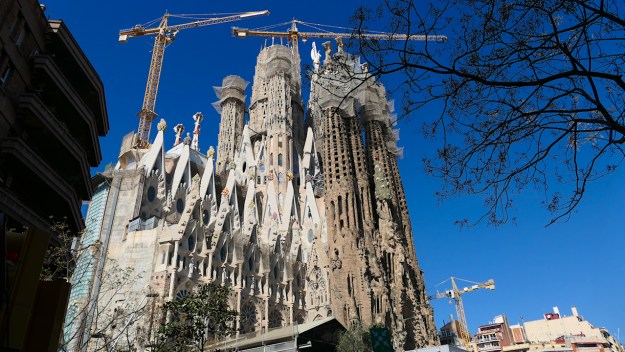
Sagrada Familia: A ‘wonder’ in progress

Epic, as an adjective, is often over-used. Epic is defined as grand, impressive, remarkable. But when you are talking about the Basilica de La Sagrada Familia in Barcelona, Spain, epic doesn’t seem to do it justice. It really is something you need to see in person. Your travel advisors at GetAway Travel have been there and we can truly attest to the fact that it is grand, impressive, remarkable and, yes, an epic example of architecture and spirituality. We can help you plan your adventure to Spain with a stop at Sagrada Familia. 

 Construction began in 1882 

 Architect Francisco de Paula del Villar was the original architect and he resigned in 1883 and Antonio Gaudi took over. It is the largest unfinished Catholic Church in the world, one of the oldest buildings in the world still under construction and the tallest religious building in Europe. It is, without a doubt, one of the most iconic examples of Gaudi’s work. It combines architectural elements that pay homage to nature, Art Nouveau, Catalan Modernism and Spanish Late Gothic. It draws more than four million visitors each year. 

Gaudi wanted to make Sagrada Familia the tallest building in Barcelona. He believed nothing made by man should eclipse what God created in nature, so the finished center tower is about 558 feet tall, a little less than three feet shorter than Montjuïc Mountain in Barcelona. Sagrada Familia started off as a church, became a cathedral but is now a basilica. A cathedral is the seat of a bishop, but a basilica is a church recognized by the pope as being highly important based on cultural or historical significance. 

In the early years of construction, Gaudi built a school for the children of construction workers. He also honored construction workers by embedding their faces in sculptures and carvings around the basilica. And, Gaudi’s face is in at least two areas that were completed before his death. He is portrayed as St. Joseph in the Nativity façade and St. John in the Passion façade. 

UNESCO, despite it being a work in progress, designated it a World Heritage site in 1984 and in 2005, the Nativity façade and Sagrada Familia crypt were also declared World Heritage sites. 

 All design aspects serve a purpose 

 Gaudi’s designs, inspired by nature, contain no completely straight lines or 90-degree angles. His style is fluid and each detail of the basilica is highly symbolic, including the set-up of the outside area. His plans indicate he was inspired by tales from architects of medieval times who saw churches as central figures of a population area. Churches were meeting places and meant to be a guide to those who were arriving.  

But Gaudi didn’t want just one spire pointing to the sky, he wanted 18! Eleven spires are done The hollow spires with their accent holes are meant to resemble a bee hive and they illuminate the basilica with sunlight and moonlight. 

Continue reading

Architecture, history flavor Barcelona experience

Barcelona

There’s so much to love about Barcelona, the capital of Spain’s Catalonia region. The weather is pleasant, the cuisine is tasty, there’s some very attractive beaches and the area oozes cultural heritage and dragons. In the early 19th century commerce and trade made the area prosperous and residents embraced their economic good fortune by building grand houses and landmarks. The city is home to nine UNESCO World Heritage sites. If you’re interested in embracing the historical passion and cultural flare of Barcelona, your travel advisor at GetAway Travel can make that happen. 

 Modernism mixes with tradition 

La Rambla – Barcelona

 When you arrive in Barcelona, join the other tourists on La Rambla. It is the famous and iconic boulevard that links Port Vell to Placa Catalunya and it practically vibrates with energy. There are street performers, artists and vendors lining the street and it’s a great place to find souvenirs. As you soak in everything that’s going on, think of it as a prelude for what is sure to be a fabulous experience! 

Dragon in the Park

A word or two about dragons, St. George is the patron Saint of Catalonia. There are more than 400 dragons represented around the city. The most famous and most photographed is in Park Güell. 

Dragon on La Rambla street – Barcelona

Exciting and amazing are not words normally used to describe architecture, but there’s really no other way to describe the works of Antoni Gaudi. Gaudi is responsible for the design of some stunning buildings around the city as well as some of the other modernist landmarks. Two fabulous contributors to modernism, Picasso and Joan Miró are also represented in the city. 

The Museu Picasso is housed in five medieval palaces and more than 4,200 of his works are on display. Fundació Joan Miró features modern art done by Miró, as well as temporary exhibitions and some collaborative projects. 

Joan Miró Park – Barcelona

If you are interested in a shopping experience, check out the shops in the Diagonal Mar area. But don’t skip Barcelona’s La Boqueria, an urban market that has existed since medieval times. Luckily, it was roofed in 1914. More than 300 permanent stalls sell produce, cheese, cold meats, olive products, nuts and sweets. You can get beer and tapas at the bars inside. Pro shopping tip — the best deals are closer to the interior. 

La Boqueria – Barcelona

Camp Nou is a 99,000 seat stadium which has been home base for FC Barcelona since 1957. Memorabilia from one of the world’s most prestigious soccer teams is on display in the museum. 

The Palau de la Música Catalana is a magnificent concert hall. This art nouveau building is the only one of its kind to be designated a UNESCO World Heritage site. The incredible ornate stained glass roof should not be missed! 

Palau de la Música Catalana – Barcelona

 Gorgeous Gaudi buildings 

 Gaudi disliked straight lines because he said they did not occur naturally in nature. Instead, he embraced textures, curves and shapes whenever he could. The Sagrada Família is Gaudi’s largest, most spectacular work. Started more than 100 years ago, it is only 3/4 complete. When it is finished, this Roman Catholic Church will be the tallest church in the world. It combines the architectural styles of Catalan Modernism, art nouveau and Spanish Late Gothic. It is a fantastical melding of textures and shapes that appear like delicate filigree in some areas and strong, bold statements in other areas. 

La Sagrada Familia towers

All of Gaudi’s works have softened lines so they resemble buildings that seem to be shimmering in high heat. 

La Sagrada Familia interior vaulted ceiling

Casa Batlló is a remodel he took on at the turn of the 20th century. Tiles on the building’s roof are said to resemble dragon scales. Casa Mila which is also known as La Pedrera is another Gaudi building and even though it was built in 1912, it includes an underground parking garage. 

Casa Batlló – Barcelona

Palau Güell is one of Gaudi’s earliest works. It was the home of the Lopez family until they moved to what is now known as Park Güell. Palau Güell was built with stone coated with marble and then it was decorated with intricate hand-carved wood and ironwork. 

Park Güell – Barcelona

Casa Vicens was also a private residence worked on by Gaudi and was also one of his earliest works. It has lush outdoor gardens surrounded by a courtyard with patterned walls inside and out and the exterior of the house is bright colors — green, red and white with floral patterned tiles. This summer home, which included elaborate waterfalls and fountains in the garden, was just opened as a museum in 2017. 

Casa Vicens – Barcelona

Park Güell was supposed to have been a housing complex designed by Gaudi, but the original design didn’t work out for that purpose and it is now a green space and garden complex. The park terraces offer gorgeous views of the city. A museum on the grounds has furniture and household items designed and decorated by Gaudi. It is filled with unique architectural features, serpentine benches, mosaics, colonnades, fountains, sculptures and, the famous frequently photographed dragon. 

 You won’t go hungry  

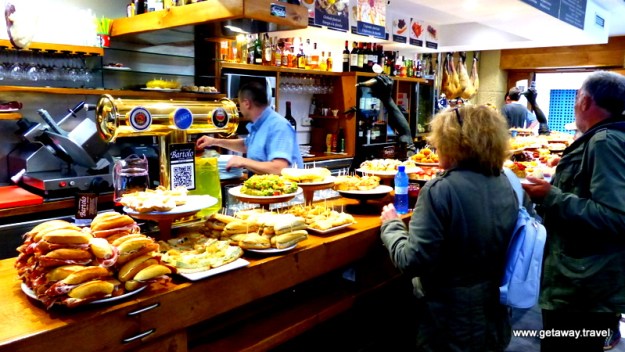
 The food is superb in Barcelona. At any given time some international food is trending. But you can count on getting pintxos, tasty morsels skewered onto bread, at most bars. 

Food market – Barcelona

You can be assured fish, as well as prawns and razor clams, will be on the menu as well as something with jamón, a fabulous flavored ham. Try fideuà which is similar to paella only made with pasta. Paella, like fideuá, has rabbit, chicken or seafood, flavored with saffron and cooked in a shallow pan. Arros negre is rice simmered with cuttlefish or squid. 

Fideuà

The olives are marvelous. Black or green, they taste fresh and bright. Beware, they are served with pits in because removing them would require soaking them in a substance that softens them and spoils the taste. Have a rich Crema Catalana for dessert. It is custard flavored with lemon zest and cinnamon or vanilla with a carmelized crust on top similar to crème brûlée. 

Crema Catalana

Now that we’ve piqued your curiosity and whetted your appetite, we’re ready to plan you getaway. We can be reached at:  (262) 538-2140, e-mail: sue@getaway.travel or paul@getaway.travel 

Pintxos: Tasty morsels popular in Basque region

Traveling is an enriching, eye-opening wondrous experience from the scenery to the people, to the food. Sure, preparing octopus in your kitchen may seem like a daunting task that you’re likely to skip — but eating it in a restaurant prepared by chefs who make it their business to create an epic seafood dish is something entirely different. At GetAway Travel we are big proponents of adding adventurous eating and drinking to your list of things to do on vacations, because we do. That’s one of the reasons we can make your next getaway a vacation to remember. 

Every country, region, city, town and even tiny village you visit while traveling likely has specialized cuisine you should not pass up. Whether you are eating in a five-star restaurant or a cafe by the side of a canal, it’s a sure bet the wait staff can give you a great dining recommendation. When traveling in the Basque region of Northern Spain, the wait staff or the bartender, will likely advise you to partake in a pintxos or two. 

 What exactly is pintxos? 

 First, it’s not a tapa. Tapas are small versions of larger meals. Pintxos are more like appetizers, although it is possible, certainly, to make a meal of them. Pintxos (pronounced peen-chos because in Basque the tx is pronounced like the ch in cheese) are delightful little skewered bites. The literal meaning of pintxos or pinchos, is skewered.  Continue reading

Experience the passion, vitality and architecture of Seville


Although flamenco is often referred to as a dance, it is truly an art form. So much so that it is recognized by UNESCO as part of the world’s cultural heritage. Without question, the best flamenco in the world can be found in Seville. Said to have been built by Hercules himself, Seville is brimming with history, emotion and experiences that visitors remember for a lifetime. GetAway Travel is ready to map out your trip to Seville.

Southern Spain’s largest city


Seville is the capital and largest city in the province of Seville. It is one of the three most famous cities in Andalusia. The two other cities are Cordoba and Granada. Andalusia references the area of Spain bordering on the Mediterranean Sea and Atlantic Ocean. The area was under Moorish rule from 711 to 1492 and the Moorish influence can be seen in architecture around the city.
Seville has some of the oldest universities in the world, some of the most fabulous outdoor plazas as well as superb flamenco presentations, tapas, sangria and bull fighting. Cafes everywhere offer tapas, small plate appetizers and many times tapas are free with a beverage. Ask for the house offerings and feel free to ask around to find out who has the best tapa choices. Likewise, many bars and nightclubs offer flamenco, but the experience will vary. Smaller venues, where you might have to inquire about seating options, give the best up-close and personal performances.

View from the Giralda Tower

plaza de torros

Before we talk about history and architecture, a word or several about the food. Gazpacho is a cold soup of tomato, cucumber, peppers, garlic, oil and vinegar and it often served with diced ham and hard-boiled eggs. Pescaíto Frito is fried fish — all varieties of fish including anchovies, squid, cuttlefish and cod. Bascalas con tomate is cod cut in large pieces served with tomato. Don’t skip the cocido which is chickpea stew with all types of meat.


Serranitos and montadillos are delightful different sized sandwiches filled with any ingredient you can think of served with French fries. Even though the idea of eating a bull’s tail might be a bit off-putting, rabo de toro is bull or ox tail slow simmered in onions, garlic and wine.

A common site in Spain

Architectural marvels

The Catedral de Sevilla is a world heritage site and it was built in the late 15th century. Nearly a mile long and a mile and a half wide, it contains 40 separate chapels and is thought to be one of the largest cathedrals in the world. It has a classic exterior and the interior is even more impressive. The main altar consists of 36 gilded panels. When you finish marveling at the interior, take a break in the Patio de los Naranjos just outside and enjoy the orange trees. Then, climb to the top of the nearby La Giralda which is the stand-alone bell tower for the cathedral. It is part of the original 12th century mosque from the Berber-Muslim dynasty. Views from the top are breathtaking.

Rooftop – Catedral de Sevilla

The Universidad de Sevilla is one of the oldest higher learning facilities in the Spanish speaking world. Constructed in the 16th century, part of the university is actually a former tobacco factory that was operating until the 1950s. The university took 42 years to build and it actually has a moat and a drawbridge.

Interior – Catedral de Sevilla

The Real Alcázar palace and gardens was built in the 7th century and occasionally still hosts the royal family. The entire palace is of varied architectural design from Gothic to Baroque styles.

Real Alcázar

Celebrate all things flamenco at the Museo del Baile Flamenco. You will be informed of the art of flamenco through song, dance and guitar. Built in the 18th century, the foundation is a former Roman temple. There are interactive exhibits exploring everything from the music to the costumes; there are daily flamenco shows and you can take a music or dance class!

Christopher Columbus in Santa Maria de la Sede Cathedral – Seville

Hey, that plaza looks familiar!

The Plaza de España is a 540,000 square foot place and more than half of the outer area is a huge neo-Moorish building. The huge mosaic tile covered plaza includes towering marble columns and intricate murals as well as a fountain and a canal. The colorful place includes 48 ceramic-tiled alcoves with a painted bench. The tile mosaics depict important symbols and themes from each of Spain’s provinces. The plaza has been featured in numerous movies including Lawrence of Arabia and Star Wars.

Plaza de Espana

The courtyard of the Casa de Pilatos also features intricate tile work and it has statues from the Roman era of Minerva, Ceres and a dancing muse. The Greek statue of Athena dates back to the 5th century.

Plaza de Espana

If viewing a bull fight is not something you are considering, you still should make a visit to the Plaza de Toros when a bull fight is not going on. The Baroque architecture at the entrance is impressive and even though it was constructed in the mid 1700s, the acoustics are considered some of the finest in the world.

Real Alcázar

Tapas, sangria, history-packed sites — there’s something for everyone in Seville and the advisors at GetAway Travel are here to plan your visit. We can be reached at:  (262) 538-2140, e-mail: sue@getaway.travel or paul@getaway.travel

Alhambra – part fortress, part palace, part garden and

Alhambra – Granada, Spain

Part fortress, part palace, part garden and part government city the medieval complex of Alhambra overlooking the city of Grenada is one of the top tourist attractions in Spain.  The eightAlhambra-and-Generalife-Granada-Spain_82h century old site was named for the reddish walls and towers that surrounded the citadel: al-qal’a al-hamra in Arabic means red fort or castle. It’s the only surviving city  of the Islamic Golden Age and a remnant of the Nasrid Dynasty, the last Islamic kingdom in Western Europe.

Alhambra offers up stunning ornamental architecture, lush gardens, cascading water features and breathtaking views of the city.  The impressive complex is deservedly listed as a UNESCO World Heritage site.  

Here are the 4 primary attractions (there are many more and all you have to is explore)

Alcazaba – This is the oldest part of Alhambra.  The ruins of this massive fortress sit atop the crest of a hill and provides the finest views of the entire city and the Sierra Nevada mountains.

View of Grenada from Alcazaba

Palace of Charles V – The most recent addition, this 16th century building was commissioned following the Reconquista by Charles as a royal residence close to the Alhambra Palace.  It has an impressive circular courtyard and 2 museums inside.

Palace of Charles V

Continue reading

Diverse cultures leave their mark on Cordoba

Although tourists set their sights on Seville, Granada or Madrid when they think about visiting Spain, it would be a mistake not to go to Cordoba.  

Alcázar de los Reyes Cristiano

Cordoba is the only city in the world with four protected UNESCO sites. It is one of the few places in Europe where Jews, Muslims and Christians lived together relatively peacefully. It is the home of the largest mosque in the world which co-exists with a cathedral. It was an important Roman city as well as a major Islamic center. It was the largest economic and culture center in the Western world. 

In southern Spain, Cordoba is a fabulous place to visit in spring or autumn. In the summer, temperatures can reach 100 or higher making sightseeing difficult. 

At GetAway Travel we can arrange your trip to Cordoba and some of the surrounding cities and make sure you have tickets to the bull-fighting museum and/or Cordoba’s month-long flower festival. 

Continue reading